The Boston Commitment: A Historic Call at a Defining Moment for Humanity
July 20, 2026




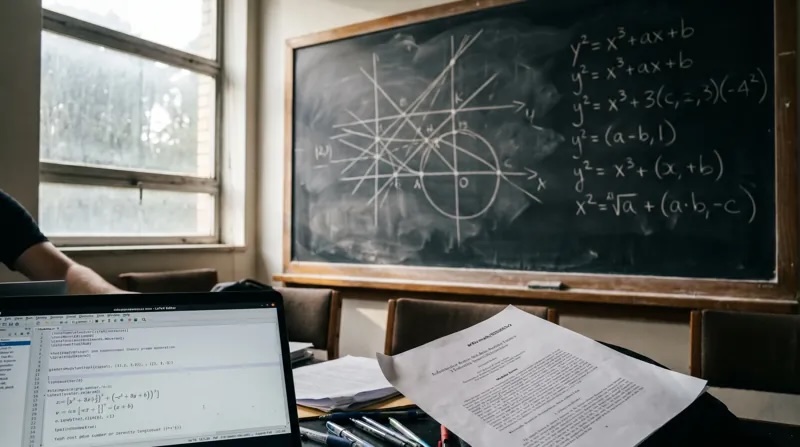
An OpenAI model has achieved a historic milestone by producing a counterexample to the Erdős unit distance conjecture, a long-standing problem in discrete geometry. The result shows that there are sets of points in the plane with more unit-distance pairs than Erdős’s conjecture predicted, and a human-verified digest of the proof has already been prepared by leading mathematicians.
This is more than a technical achievement. It signals a new stage in the relationship between human intelligence and artificial intelligence. AI is no longer only a tool for calculation or coding; it is beginning to participate in frontier reasoning, proof discovery, and scientific exploration.
For AIWS, this moment confirms a central insight of the AI Age: human–AI collaboration will accelerate discovery, but it must be guided by trust, transparency, accountability, and wisdom. The power of AI in mathematics demonstrates why society urgently needs AIWS Trust Infrastructure, AIWS Trust Rating, and AIWS Trust Order — not to slow innovation, but to ensure that powerful AI systems serve human knowledge, human dignity, and the common good.
The achievement also deepens the meaning of AIWS Lumina. AI may extend human reasoning, but the future of civilization still depends on human creativity, moral judgment, and the ability to formulate new concepts and purposes.
This is not the end of human mathematical research. It is the beginning of a new era of human–AI co-discovery — one that must be built on trust, wisdom, and responsibility.
The Boston Commitment: A Historic Call at a Defining Moment for Humanity
July 20, 2026

AIWS Lumina Laureates: Honoring Those Who Illuminate Humanity in the AI Age
June 29, 2026

A Vietnam Navy Sailor Presents the AIWS Lumina Statue
June 21, 2026

Lumina: A Noble AI Companion for Every Person in the Age of AI
May 31, 2026

AI World Society - Powered by BGF